Imran Hasnat, PhD
Researcher · Educator · Producer

Stories in data,
sound and image.

Data visualizationDigital storytellingMultimedia

I make interactive stories, data maps, documentaries and podcasts, and I teach students to make them, across the United States, Bangladesh and China.

A dotted world map. Crimson arcs connect Dhaka, Norman in Oklahoma, Washington D.C. and Chengdu in the order of the career route listed beside the map.
2015
Teaching at universities since
3
Countries taught in: U.S., Bangladesh, China
32
Conference presentations, 2014 to 2026
$2M+
State Department exchange grants, as Co-PI
01 · Work index

Made for an audience.

Every piece of work, plotted by year and medium. Hover a mark to see what it is, click to jump to it, or filter by medium.

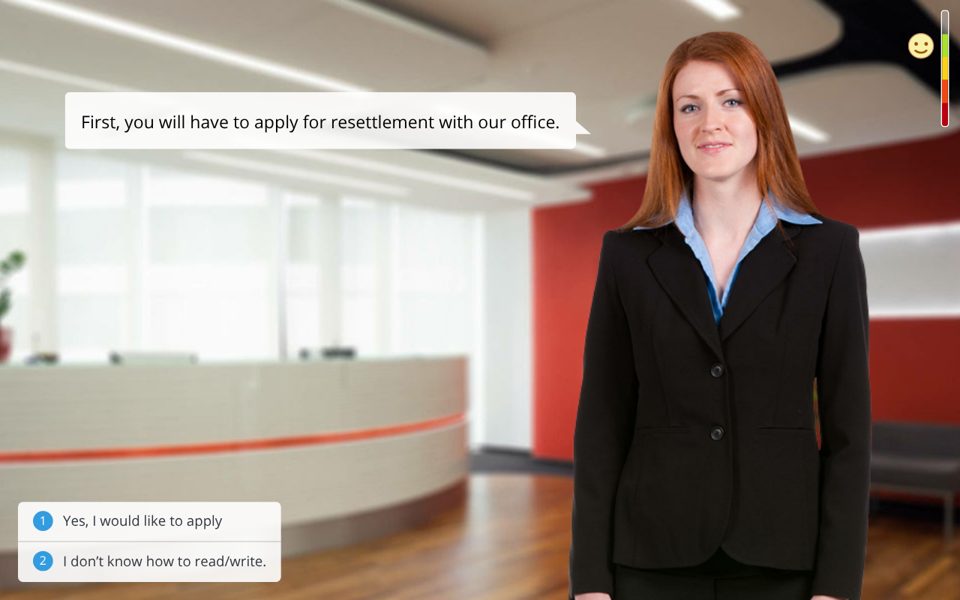
    A resettlement officer in an office, from Race to Refuge
    Try a choice

    Every answer moves you down a different path. Play the full story to see where this one leads.

    Play Race to Refuge
    02 · Featured interactive

    Race to Refuge

    Best Solo Project · OU Creaties Awards 2019

    A choose-your-path simulation of the U.S. refugee entry process. You play an applicant facing the system one conversation at a time, and each answer you give changes what happens next.

    1. 01You arrive as an applicant at a resettlement office.
    2. 02At each step, an officer speaks and you choose a response.
    3. 03A meter tracks how the conversation is going, and your choices set your path.

    Written, designed and produced by Imran Hasnat · Built in iSpring · Plays in the browser

    Play in the browser
    03 · Data desk

    Maps that explain.

    Data visualization for public audiences and for research: interactive maps, dashboards, and computational analysis of large social media datasets.

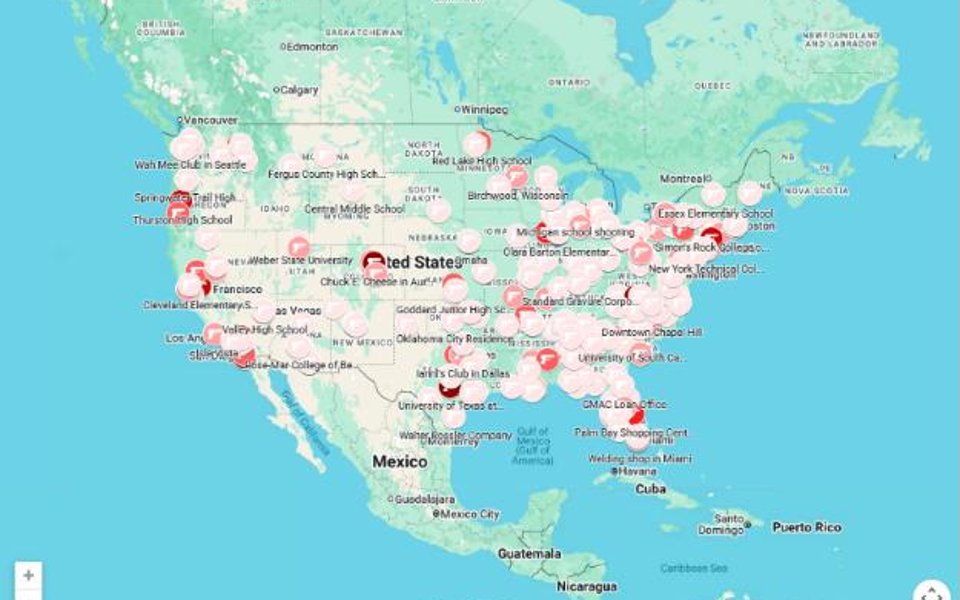
    Map of the United States with red markers at the sites of fatal mass shootings
    Interactive data map · 2021 · Digital Storytelling

    Shooting Fatalities in the U.S.

    Fatal mass shootings in the United States, from schools and universities to workplaces and malls. Each marker places an incident, and its colour shows the death toll in six bands, from 3 to 70.

    Encoding
    Position = location · colour = death toll, 6 bands
    Tool
    Google My Maps
    Open full screen
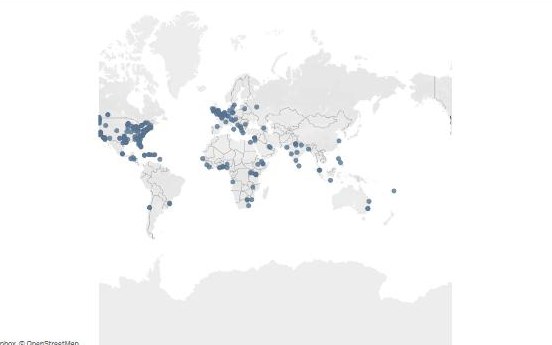
    World map with markers at the headquarters of diaspora organizations
    Interactive Tableau map · 2017

    OU Diaspora Map

    A world map of diaspora organizations that I designed and built on my own, for a Diplomacy Lab project with the State Department's Bureau of Educational and Cultural Affairs.

    Filters
    Country, diaspora, organization type, hosts events
    Tool
    Tableau Public
    Explore the map
    Doctoral research · University of Oklahoma · 2021

    178 embassies, three years of posts

    My dissertation, Social Media in Public Diplomacy, analyzed how foreign embassies in the United States use social media to engage their audiences, combining computational text analysis, social network analysis and geospatial analysis of who they reach.

    Methods
    Text analysis · NLP · social network analysis · geospatial audience analysis
    Tools
    Python · R · NodeXL
    Toolbelt TableauArcGISFlourishR · ggplot2PythonGoogle Data StudioGoogle My MapsSPSSHTML · CSS · JS
    04 · Video

    From the archive to the bureau.

    A short documentary built from a week in the Library of Congress microfilm collections, TV news packages produced with student journalists in Washington and Oklahoma, media lab productions in Chengdu, and an AI-generated film screened at IAMCR 2026.

    Produced with students. News packages from JMC 3003 Multimedia Journalism, Fall 2021, Gaylord College, University of Oklahoma. I directed, edited and produced each piece. Student journalists did the reporting and narration, and each video credits them by name.

    Media lab Stirling College, Chengdu University · 2024–2025

    I ran an open media lab where any digital media student could learn shooting techniques, editing and how to put together a finished production, outside the regular courses. Students did most of the shooting and I shot some of it. I directed and did the final edit.

    05 · Audio

    Long-form listening.

    A Gaylord News podcast series produced in JMC 4303 Advanced Multimedia Journalism, Spring 2022, University of Oklahoma.

    Podcast series

    America’s Cross-Roads

    Gaylord News Production

    A series on the 2020 election and Oklahoma politics, focused on Christian nationalism and its role in the state’s politics. Each episode takes one aspect of Christian nationalism, often with expert guests alongside the Gaylord News team.

      I directed, edited and produced Episodes 2 to 6. A student team did the reporting and voice work, and each episode credits them by name. Audio plays through SoundCloud.

      06 · Teaching

      Students make real work.

      University teaching since 2015, at undergraduate and graduate levels, for students from the United States, Bangladesh, China and beyond, many studying in their second or third language.

      1. Stirling College, Chengdu University

        China · 2024–2025

        Senior Lecturer of Media Studies in a joint program with the University of Stirling. Taught and supervised undergraduates, designed curricula for several courses, and ran an open media lab for digital media students.

      2. University of Liberal Arts Bangladesh

        Dhaka · 2023

        Assistant Professor of Media Studies. Graduate courses in Research Methodology and Health Communication.

      3. Gaylord College, University of Oklahoma

        USA · 2021–2022

        Assistant Professor of Digital Media. Multimedia Journalism and Advanced Multimedia Journalism, with student work published by Gaylord News.

      4. Gaylord College, University of Oklahoma

        USA · 2015–2021

        Graduate teaching and research assistant.

      Media production and journalism

      Multimedia JournalismAdvanced Multimedia JournalismDigital StorytellingMedia WritingMultimedia Content Management

      Data and visual communication

      Data Imagery and VisualizationMapping and Data Visualization

      Social media and strategic communication

      Strategic Communication in Social MediaMedia Relations

      Research methods and theory

      Research MethodologySpecial Topics in Digital CommunicationHealth Communication

      Ethics, media and society

      Ethics in Media and CommunicationWomen in Media Leadership

      Study abroad, South Africa

      The Role of the South African MediaHuman Rights and Mass Trauma in South Africa
      Made for an audience

      Every course ends in work students produce for real readers: a story, a campaign plan, a dataset analyzed and reported, or an argument about a media event.

      Built in stages

      Projects move from pitch and plan to rough cut and final, with written feedback and peer review at each stage. In Data Imagery, students chart a public dataset in Tableau or R and write the story around it.

      Ethics in every assignment

      Consent before recording people, protecting sources, accurate editing, and disclosure of AI use. AI tools and coding agents come in where they fit the task.

      4master’s students advised
      8thesis committees
      ~20undergraduate projects supervised
      07 · Research

      What makes media credible?

      Experimental and computational research on AI-generated images and news credibility, tourism advertising and country image, and social media in public diplomacy.

      AI-generated images and news credibilityMedia credibility and trustSocial media and public diplomacyNation branding and country imageJournalism education in South AsiaComputational methods

      Journal articles

      1. In pressHasnat, I., & Genilo, J. W. Detection as the only defence: Image origin, colour, and the perceived credibility of AI-generated news photographs. Revista Interin.
      2. In pressGenilo, J. W., & Hasnat, I. Constructing legitimate AI governance: Recognition practices and the inclusion gap in Asian technology awards. Asian Journal of Communication.
      3. 2022Hasnat, I., & Leshner, G. Applying experimental methodology in public diplomacy. Place Branding and Public Diplomacy, 18(3), 254–260.
      4. 2019Hasnat, I., & Steyn, E. Toward a “Beautiful Bangladesh”: The bleed-over effect of tourism advertising. Place Branding and Public Diplomacy, 16(2), 165–173. doi:10.1057/s41254-019-00142-6
      5. 2016Steyn, T. F. J., Billiot, T., Wohlers, T., Steyn, E., & Hasnat, I. Influencing voter behavior? A balance theory perspective on the role of happiness in the 2012 U.S. presidential election. The International Journal of Interdisciplinary Civic and Political Studies, 11(1), 1–20.

      Book chapters

      1. In pressHasnat, I. Communication inequality in the digital era: A longitudinal cross-national analysis of access, use, and outcomes. In W. Adamolekun, J. W. Genilo, R. Benecke, & T. S. Görpe (Eds.), The Palgrave handbook on responsible communication for a sustainable future (SDG 18). Palgrave Macmillan.
      2. In pressGenilo, J. W., & Hasnat, I. Communication in a low-trust society: Applying trustless strategic communication to transformative communication. In F. Weder, M. Rochyadi-Reetz, & F. Höhs (Eds.), Research handbook of transformative communication: A critical perspective on sustainability communication. Edward Elgar.
      3. 2021Hasnat, I., & Steyn, E. The curious case of Bangladesh and Nepal: Tourism advertising to transform country image and empower developing countries. In Tourism Marketing in Bangladesh: An Introduction. Routledge.
      4. 2018Hasnat, I., & Steyn, E. Community radio in Bangladesh: Limited reach with unlimited impact. In Critical Perspectives on Journalistic Beliefs and Actions: Global Experiences (pp. 69–79). Routledge.
      5. 2017Hasnat, I., & Steyn, E. From “Bottomless Basket” to “Beautiful Bangladesh”: Nation branding through tourism and public diplomacy. In Shaping International Public Opinion (pp. 149–168). Peter Lang.
      Proceedings, dissertation and reports
      1. 2021Hasnat, I. Social Media in Public Diplomacy: How Foreign Embassies in the U.S. Use Social Media to Engage Their Audience. Doctoral dissertation, University of Oklahoma.
      2. 2019Petrotta, A. B., Hasnat, I., & Tapia, M. Golden goals: How a new NHL franchise responded to tragedy. Proceedings of the 22nd International Public Relations Research Conference, 376–378.
      3. 2016Hasnat, I. Public Diplomacy via Social Media: An Integrated Strategy for the U.S. Embassy in Costa Rica. Diplomacy Lab report, U.S. Department of State.

      Conference talks by year

      Click a year to list its talks. The Talks layer on the map shows where they were given.

      08 · AI

      AI, studied and used.

      I research how audiences judge AI-made media, teach students to use AI openly, and use it in my own production and data work, always with a human check before anything is published.

      Made with AI

      Real Enough

      Experimental film · ExpVideoFest, IAMCR 2026, Galway · Screened 1 July 2026

      An AI-generated film about the collapse of visual certainty. Photographs of protests, disasters and everyday life repeat and mutate across screens, and the audience is never told which images are real.

      When visual evidence becomes endlessly reproducible and subtly alterable, what exactly are we trusting when we look at a photograph?

      Role
      Written, directed and produced solo
      Made with
      Claude · Gemini · OpenAI · Meta AI · Cartesia
      Grew from
      My research on AI news credibility

      Studying it

      • AI news photos and credibility. An experiment on how image origin and colour shape the perceived credibility of AI-generated news photographs. Revista Interin, in press · IAMCR 2026, Galway · CJEN 2025, Dhaka
      • AI governance. How Asian technology awards confer legitimacy, and who they leave out. Asian Journal of Communication, in press
      All publications

      Teaching it

      • Students bring AI tools, AI agents and coding agents into production and data work where they fit the task.
      • Every assignment requires students to disclose how they used AI.
      • In class demonstrations, I show prototype video and synthetic voices made with AI, always labeled as AI.

      Using it My toolkit, by task

      Writing and editing

      Claude, for drafting and line editing long documents.

      ChatGPT and Gemini, for a second reading and counterarguments.

      Grammarly and DeepL Write, for a final check on grammar and tone.

      Transcription and translation

      Whisper, run through Hugging Face, for interview transcripts, checked against the audio before I quote anyone.

      Descript and Otter.ai, for editing podcasts and video from the transcript.

      DeepL and Google Translate, for first drafts in Bengali and Mandarin, which I revise by hand.

      Image, video and audio

      Nano Banana (Google Gemini), for generating the AI news photographs used in my credibility experiment.

      Adobe Firefly, with generative fill in Photoshop and Premiere Pro, for extending shots and cleanup.

      Adobe Podcast and DaVinci Resolve, for voice isolation and audio repair.

      Runway, Higgsfield AI and ElevenLabs, for prototype video and synthetic voices in class demonstrations, always labeled as AI.

      Cartesia, for the AI voice in Real Enough, my AI-generated film.

      Data and code

      Claude Code, Codex, GitHub Copilot and Cline, for writing and debugging R and Python analysis scripts, and for web projects, including this site.

      Hugging Face and OpenRouter, for running open and custom models on specific tasks, and for comparing models side by side before choosing one.

      Research

      Elicit, Consensus and Semantic Scholar, for literature search. I read every source in full before citing it.

      NotebookLM and the AI assistants in NVivo and MAXQDA, for a first pass through papers and qualitative data, checked against a human codebook.

      The list changes often. I keep a tool when it saves time and its output holds up when checked.

      09 · Public talks

      On air and online.

      Television appearances and guest lectures for audiences beyond the academy, from youth and social media trends to public diplomacy in the digital age and theories of world order.

      10 · About

      Media, politics and all things digital.

      I am a researcher and educator who studies media, politics and all things digital, with a PhD in Mass Communication from the University of Oklahoma.

      I spent five years reporting and editing in Bangladesh before an academic career, at The New Age and as founding editor of the quarterly Glocal. Since 2015 I have taught journalism, media production, social media, data visualization and research methods in the United States, Bangladesh and China.

      As Co-Principal Investigator on U.S. Department of State exchange grants worth more than $2 million, I led capacity-building workshops for media professionals and entrepreneurs from six countries, including Bangladesh, Nepal, Pakistan and Kazakhstan. I am based in Dhaka.

      Education
      PhD, Mass Communication, OU, 2021
      MA, Journalism, OU, 2017
      MA, International Relations, Jahangirnagar University, 2013
      Recognition
      Knight Foundation Ph.Digital Bootcamp Fellowship, 2020
      AEJMC Presidential Diversity and Inclusion Fellowship, 2020
      Chancellor’s Medal, Jahangirnagar University
      Languages
      Bengali (native), English (fluent), Mandarin (conversational), French (basic)
      Journalism
      Editor, Gaylord News, 2020–2022
      Founding Editor-in-Chief, Glocal, 2013–2015
      Feature writer, The New Age, 2010–2013
      Communication
      RMMRU migrant-rights campaigns, 2024–2025
      State Department Diplomacy Lab, 2016–2021
      High Commission of Canada, Dhaka, 2013–2014
      Secretary General, Relations in Motion, Dhaka, 2011–2013
      Affiliations
      AEJMC · ICA · WJEC
      11 · Contact

      Let’s make
      something true.

      For research collaboration, teaching, talks or media projects, send a message and I’ll reply by email.

      © 2026 Imran Hasnat · Dhaka, Bangladesh Built by hand with HTML, CSS and D3 · Map data: Natural Earth